Beautiful Girl Embroidery Design Review
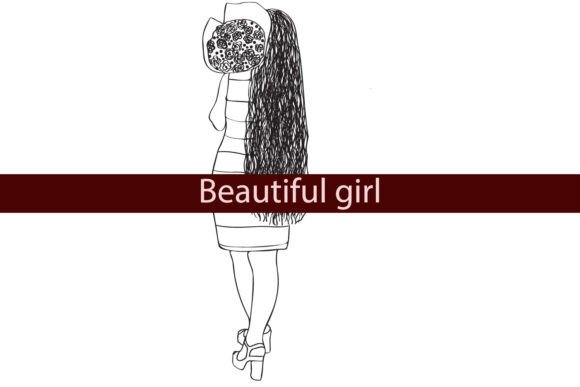
As a designer who spends half the day sketching and the other half troubleshooting stitch paths, I don’t just look at an embroidery file; I look at how it will behave under the needle. When I first pulled up Beautiful Girl, my immediate reaction was one of quiet appreciation for its simplicity. It is a black and white line art illustration featuring a girl with long hair holding a bouquet of flowers, standing with her back to the viewer in a long dress. At first glance, it looks like a standard vector graphic, but in the world of machine embroidery, "simple" is often the hardest thing to execute perfectly. This design falls squarely into the Illustrations category and serves as a versatile Graphics asset, but does it translate well from screen to fabric?
First Impressions: Mood and Visual Personality
The mood of this design is nostalgic and gentle. By showing the subject from behind, the design invites the viewer to project their own emotions onto the figure. It feels less like a portrait and more like a memory or a moment captured in time. For an embroiderer, this lack of facial detail is actually a strategic advantage. You avoid the uncanny valley that can sometimes plague embroidered faces, especially when working with limited thread colors. The focus shifts entirely to the silhouette, the flow of the long hair, and the bouquet of flowers.
The visual personality is elegant yet approachable. It doesn’t scream for attention; instead, it whispers. This makes it incredibly suitable for projects where you want the craftsmanship to speak louder than the subject matter. Whether you are creating a boutique brand identity or a heartfelt personal gift, the design carries a sense of calm professionalism. It works beautifully as a tote bag design because the vertical orientation of the standing figure complements the shape of the bag, or as a center-front placement on a sweatshirt embroidery project where it becomes a focal point without overwhelming the garment.
Real-World Application: From File to Finished Product
I recently considered using Beautiful Girl for a custom order—a set of personalized aprons for a baking competition winner. The client wanted something timeless, not trendy. The line art style of this design fit perfectly. Because it relies on clean lines rather than complex shading, it translates exceptionally well into different stitch types. I envisioned using a fine satin stitch for the outline of the dress and the bouquet, giving it a crisp, defined edge that stands out against textured fabrics like linen or canvas.
This design is also highly adaptable for applied embroidery techniques. If you were to cut out the shapes from contrasting fabric and applique them onto a base layer, the result would be stunning. The long dress and flowing hair provide ample surface area for fabric application, allowing you to play with textures—perhaps a floral print for the dress and a solid color for the background. This elevates the piece from a simple stitched image to a mixed-media textile art piece, significantly increasing the perceived value of the handmade product.
For digital sellers, this is a goldmine. As a digital embroidery file, it appeals to a broad audience. It’s perfect for baby embroidery on muslin blankets or burp cloths, where the soft lines feel safe and soothing. It also works wonderfully for holiday embroidery themes, such as Easter or Mother’s Day, given the flower motif. The versatility allows it to sit comfortably in an Etsy seller shop alongside more niche designs, acting as a reliable bestseller that appeals to both hobbyists and professional decorators.
Where Caution Is Required
However, no design is without its challenges. While Beautiful Girl is visually striking, there are specific scenarios where it requires careful handling. First, consider the scale. If you attempt to digitize or use this design in a very small hoop size, the details of the bouquet and the individual strands of hair may merge into an indistinct blob. Line art relies on negative space and clear boundaries; shrink it too much, and you lose the essence of the illustration. Always check the recommended hoop size before committing to a small accent patch or a tiny logo on a cap.
Fabric choice is equally critical. This design performs best on stable, medium-weight fabrics. If you try to embroider this on a stretchy knit fabric without proper stabilization, the delicate lines of the dress will pucker and distort. Similarly, on highly textured fabrics like heavy tweed or bouclé, the fine lines might get lost in the weave. In these cases, you might need to adjust your stitch density or choose a thicker thread weight to ensure the design remains legible. Dark fabrics can also pose a challenge if you are using light-colored threads, as the contrast might not be sharp enough to define the silhouette clearly. Testing on scrap fabric first is non-negotiable here.
Technical Considerations for the Designer
When evaluating this as a potential asset for your craft business, keep a few technical notes in mind. Since the source is described as a black and white line art illustration, you have significant creative freedom in how you interpret the colors. However, this also means you must decide on your thread colors carefully. A monochromatic scheme (e.g., all white threads on a grey background) creates a sophisticated, high-end look, while adding pastel accents to the flowers can make it feel more playful and youthful.
Pay close attention to the stitch density. Line art can sometimes be digitized with sparse stitches to save time, but this can lead to weak seams or gaps in the design. Ensure that the satin stitches along the edges are dense enough to cover the fabric completely, preventing any raw edges from showing through. Also, inspect the small details, particularly the leaves in the bouquet. Are they distinct, or do they overlap in a way that creates confusion? Good digitizing practice dictates that even in line art, overlapping elements should have clear separation or varying stitch directions to create depth.
Another practical tip is to test the design in black and white mockups before finalizing your color palette. This helps you verify that the composition holds up without the crutch of color. Does the balance feel right? Is the focal point clear? Once you are satisfied with the structure, you can experiment with thread colors that match your brand’s aesthetic. For commercial projects, remember to confirm licensing terms. Even if you purchase the file, ensure you have the rights to sell finished products made with it, especially if you are targeting a large market like commercial embroidery for corporate gifts or large-scale retail.
Final Verdict: A Versatile Staple
Beautiful Girl is more than just a pretty picture; it is a functional, emotionally resonant design that rewards thoughtful execution. It bridges the gap between fine art illustration and practical craft, offering endless possibilities for custom apparel, home decor, and personalized gifts. Its strength lies in its adaptability—it can be bold and graphic or soft and romantic, depending on your thread choices and fabric pairing.
For the experienced embroiderer, this design offers a chance to showcase technical skill through precise stitching and thoughtful material selection. For the beginner, it provides a forgiving canvas that highlights the beauty of line work without demanding complex shading techniques. Whether you are preparing a batch of embroidered patches for a craft fair or creating a one-of-a-kind personalized gift for a loved one, Beautiful Girl delivers a professional finish that customers appreciate. Just remember: the magic isn't just in the file, but in how you bring it to life on the fabric. Test thoroughly, stabilize properly, and let the elegance of the design shine through.